

29 de December de 2025
Glycolic Acid for Single-Step Cleaning and Disinfection in the Food Industry: Efficiency, Safety, and Sustainability
In the food industry, cleaning and disinfection are essential to ensure food safety and to comply with the highest sanitary standards.
In the food industry, cleaning and disinfection are critical to ensuring food safety and meeting the highest sanitary standards. The ongoing pursuit of more effective, safer, and more sustainable solutions has led to the development of new formulations based on high-performance disinfectant active principles, among which glycolic acid has emerged as an innovative and versatile alternative.
A multifunctional active ingredient
Glycolic acid, also known as hydroxyacetic acid, is the smallest alpha-hydroxy acid. It is obtained naturally from sugarcane or by chemical synthesis from ethylene glycol.
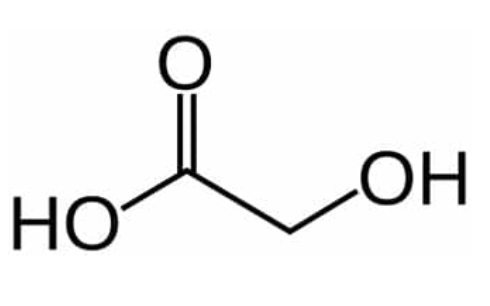
The molecular structure of glycolic acid, combining a carboxyl group and a hydroxyl group, provides multifunctional acid–polar properties that enable the dissolution and complexation of inorganic mineral residues (scale and oxides) and the solubilization of organic residues, while simultaneously contributing to effective biocidal activity.
Cleaning, descaling, and disinfection in a single step
The multifunctional properties of glycolic acid confer significant application-level advantages, enabling deep penetration and effective removal of organic and inorganic residues, including fats, proteins, limescale deposits, metal oxides, and biofilms.
Combined with its broad antimicrobial spectrum, these properties make glycolic acid an ideal ingredient for single-phase cleaning, descaling, and disinfection processes, whether in recirculation systems (CIP), on open surfaces (OPC), or via spray application.
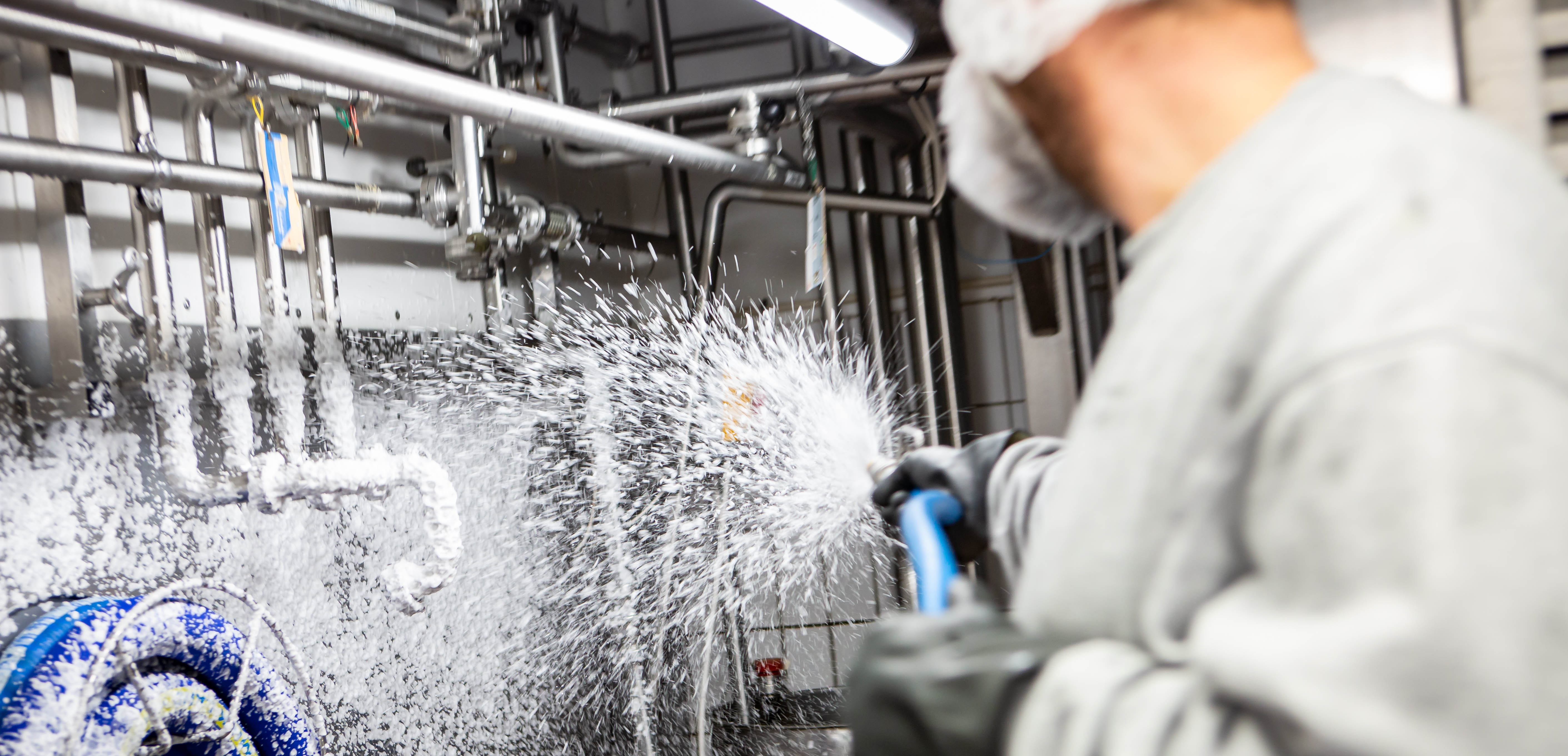
Disinfectant mechanism of action of glycolic acid
Glycolic acid is included in the Article 95 list of the Biocidal Regulation (EU) No 528/2012 as a biocidal active substance for product types PT2, PT3, and PT4
The disinfectant action of glycolic acid is based on the combination of the following mechanisms of action on microorganisms:
- pH alteration:
- Glycolic acid lowers the pH of the medium, as it is a weak acid with pKa ≈ 3.8).
- Many microorganisms (bacteria, fungi) do not tolerate highly acidic environments.
- Protein denaturation:
- At low pH, the acid induces protonation of functional groups in bacterial proteins, altering their structure and inactivating enzymes essential for microbial survival.
- Cell membrane disruption:
- Glycolic acid easily penetrates membranes due to its small and polar molecular structure.
- Inside the cell, it acidifies the cytoplasm and disrupts the proton gradient, potentially leading to cell lysis or bacterial death.
- Synergistic effect with other agents:
- In disinfectant formulations, glycolic acid can enhance the action of other organic ingredients, helping to break down biofilms and improve penetration.
Gycolic acid: efficiency, safety, and sustainability
In addition to the properties described above, the use of glycolic acid in single-phase Cleaning and Disinfection processes offers the following benefits:
- Low corrosivity toward metals and plastics.
- High solubility and excellent rinsing capacity (no residues).
- Low odour, non-flammable, and free of volatile organic compounds (VOCs).
- Readily biodegradable.
- Low toxicity and ecotoxicity levels compared to other biocidal actives (e.g., quaternary ammonium compounds, glutaraldehyde, chlorine, etc.).
- High compatibility with other ingredients (surfactants, corrosion inhibitors, etc.).
In addition, single-step processes provide significant savings in time, water, and energy compared to cleaning and disinfection processes carried out in separate steps.
In view of these properties and benefits, glycolic acid has emerged as a high-value biocidal active substance for the formulation of single-step products, ensuring compliance with the highest standards of efficiency, sustainability, and safety currently required by the food industry.
As a result of its continuous technological development and its commitment to efficiency, safety, and sustainability in food industry cleaning and disinfection processes, PROQUIMIA incorporates the use of glycolic acid in the following single-phase products:
- DESOCAL AG, an acidic detergent–descaler–disinfectant with controlled foam for CIP systems or for spray hygiene in tunnels. Pesticide registration with the DGSP No. 21-20-10906-HA.
- DESOCAL FU, an acidic foaming detergent–descaler–disinfectant for open surfaces (OPC). Pesticide registration with the DGSP No. 24-20-12337-HA
Conclusion
Glycolic acid, due to its physicochemical characteristics and multifunctional properties, has become a high-value biocidal active ingredient for the formulation of single-phase detergent, descaling, and disinfectant products.
Unido a su perfil toxicológico y ecotoxicológico, de bajo impacto, y a su excelente compatibilidad con los materiales, el ácido glicólico ofrece el máximo equilibrio entre eficiencia, sostenibilidad y seguridad en procesos de Limpieza y Desinfección de la Industria Alimentaria.
Do you want more information?
We help you
In accordance with Regulation 2016/679 (GDPR) the basic information on personal data protection is provided below:
- Data controller: PROQUIMIA, S.A.
- Purpose of processing: Managing the sending of information, resolving queries and/or collecting data for possible business relationships.
- Legal Basis: Consent of the person concerned
- Recipients: No data will be transferred to third parties, unless this is legally obliged.
- Rights: Access, rectification, deletion, opposition, limitation, portability and presentation of claims.
- Additional information: Additional and detailed information on Data Protection can be found on our website: Privacy policy